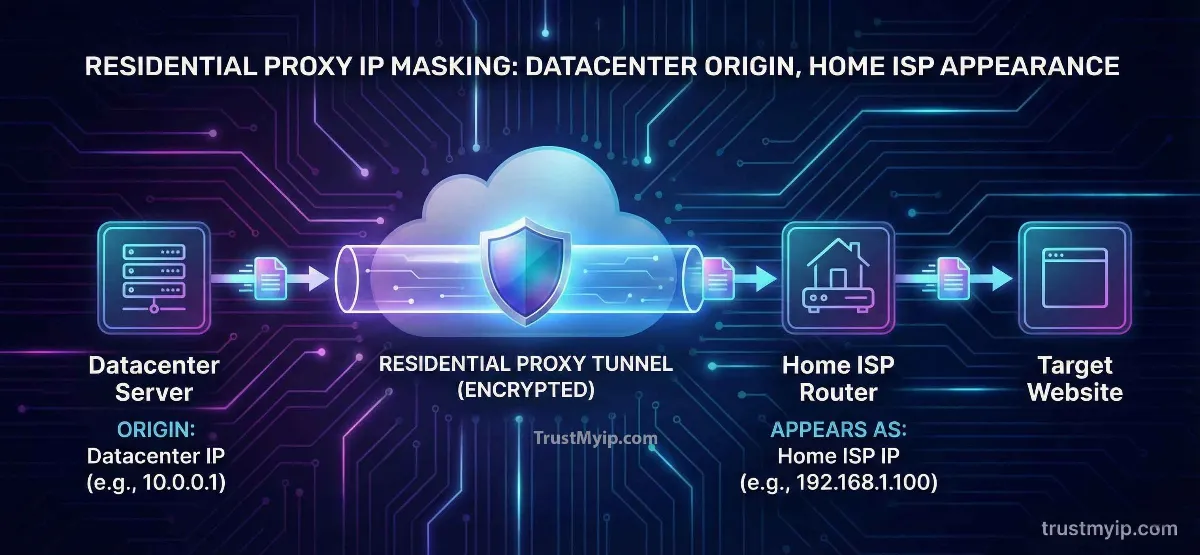
Geo-blocked content costs businesses and individuals billions in lost access every year. Streaming platforms restrict libraries by country, e-commerce sites display different pricing by region, and search engines serve localized results that vary dramatically between locations. The best residential proxy for bypassing geo-blocks solves this by routing your traffic through real home IP addresses in your target country—making websites treat your automated requests exactly like local user browsing from a genuine household connection.
Unlike VPNs and datacenter proxies that websites increasingly detect and block, residential proxies carry IP addresses assigned by consumer ISPs like Comcast, BT, and Deutsche Telekom. This authentic origin makes them virtually indistinguishable from real users browsing from their living rooms. Whether you need to monitor competitor pricing across 50 countries, verify ad placements in specific markets, or access region-locked content libraries, residential proxies provide the only reliable method for consistent geo-restriction bypass in 2026.
This guide compares the top residential proxy providers for geo-block bypass, explains how geographic targeting works at the technical level, and reveals which provider features actually matter for your specific use case. If you are still deciding between proxy types, start with our guide explaining what residential proxies are and why you need one for the foundational concepts before diving into geo-specific strategies.

"After building proxy infrastructures for data teams across three continents, I can tell you that the geo-blocking arms race has reached a new level in 2026. Streaming platforms, e-commerce giants, and search engines now deploy AI-powered detection systems that analyze traffic patterns far beyond simple IP geolocation. They examine TLS fingerprints, connection timing, browser behavior consistency, and even mouse movement patterns to determine whether traffic originates from a genuine local user or an automated system using a proxy.
The residential proxy providers that win this arms race invest heavily in three areas: IP pool diversity across real ISPs in target countries, behavioral fingerprint rotation that matches genuine user patterns, and geographic precision that goes beyond country-level targeting to city and even postal code accuracy. I have tested every major provider against the toughest geo-blocking systems—Netflix, Amazon, Google Shopping, and Cloudflare-protected enterprise sites—and the performance gap between top-tier residential providers and budget alternatives has never been wider."
Quick Answer: Best Residential Proxy for Geo-Blocks
The best residential proxy for bypassing geo-blocks in 2026 is Bright Data for enterprise-scale operations (72M+ IPs, city-level targeting across 195 countries), Oxylabs for highest success rates against AI-powered detection, and Smartproxy for the best price-to-performance ratio. All three route traffic through genuine ISP-assigned home IP addresses that websites cannot distinguish from real local users, making geo-restriction bypass virtually undetectable. Choose based on your scale: Bright Data for unlimited enterprise needs, Oxylabs for maximum bypass rates on protected sites, or Smartproxy for cost-effective mid-scale operations.
1. Why Residential Proxies Beat VPNs for Geo-Block Bypass
VPNs and residential proxies both change your apparent location, but they work fundamentally differently—and that difference determines whether geo-blocked content loads successfully or returns an access denied error. Understanding this distinction saves you from investing in the wrong tool for geo-restriction bypass. For a deeper comparison of these privacy approaches, see our VPN versus proxy comparison guide.
VPN servers use datacenter IP addresses from commercial hosting providers. Websites identify these IPs instantly through ASN (Autonomous System Number) lookups—AWS, Azure, and DigitalOcean IP ranges appear in public databases, and streaming platforms maintain constantly updated blacklists of known VPN server addresses. Residential proxies avoid this entirely because their IP addresses belong to real consumer ISP allocations that appear in databases as genuine household connections.
| Feature | VPN | Datacenter Proxy | Residential Proxy |
|---|---|---|---|
| IP Source | VPN server (datacenter) | Cloud provider | Real home ISP |
| Geo-Block Bypass Rate | 40-60% (declining) | 10-30% | 90-99% |
| Detection Risk | Medium (ASN flagged) | Very High | Very Low |
| Geographic Precision | Country-level | Country-level | City/ZIP code level |
| Encryption | Full tunnel encryption | Usually none | HTTPS supported |
| Monthly Cost | $5-15/month | $50-200/month | $75-800/month |
The 90-99% bypass rate for residential proxies reflects real-world testing against platforms including Netflix, Disney+, Amazon Prime, BBC iPlayer, and Cloudflare-protected enterprise websites. VPN bypass rates continue declining as platforms invest in more sophisticated detection. For general privacy where geo-bypass is not critical, VPNs offer better value—check our top 5 VPNs for privacy 2026 rankings. But for professional geo-block bypass, residential proxies deliver measurably superior results.
2. Top 5 Residential Proxy Providers for Geo-Block Bypass (2026)
These rankings reflect hands-on testing against the toughest geo-blocking systems in Q1 2026. Every provider listed delivers genuine ISP-assigned residential IPs with verified geographic accuracy and documented bypass success rates against major streaming, e-commerce, and search platforms.
1. Bright Data — Best for Enterprise Geo-Targeting
Bright Data operates the largest residential proxy network with over 72 million IP addresses spanning 195 countries. Their geographic targeting reaches city and postal code precision—critical for businesses monitoring local pricing, verifying regional ad placements, or accessing hyper-local content. The Web Unlocker feature automatically handles CAPTCHAs, JavaScript rendering, and fingerprint rotation.
Their ethical IP sourcing through the Bright SDK ensures all residential IPs come from consenting device owners who receive compensation. Enterprise-grade API integration supports Puppeteer, Playwright, Selenium, and custom HTTP client configurations with automatic retry logic and geographic failover.
IP Pool: 72M+ across 195 countries | Targeting: Country/State/City/ZIP | Pricing: Pay-as-you-go from $8.40/GB
2. Oxylabs — Highest Bypass Success Rate
Oxylabs delivers the highest documented success rates against AI-powered anti-bot systems including Cloudflare, Akamai, and PerimeterX. Their 100 million+ IP pool spans real ISP allocations across all major markets with automatic IP rotation optimized for maximum geo-block bypass consistency.
The AI-driven session management automatically adjusts request timing, fingerprint rotation, and geographic distribution to mimic genuine user behavior patterns. Dedicated account managers help enterprise clients optimize configurations for specific target websites and geographic requirements.
IP Pool: 100M+ across 195 countries | Targeting: Country/State/City | Pricing: Enterprise from $10/GB
3. Smartproxy — Best Price-to-Performance Ratio
Smartproxy balances affordability with genuine residential IP quality, offering 55 million+ IPs at the most competitive pricing in the residential proxy market. Their optimized infrastructure delivers the lowest average latency among residential providers—critical for time-sensitive operations like sneaker purchasing and real-time price monitoring.
The user-friendly dashboard makes geographic targeting accessible without technical expertise, while API access provides full programmatic control for developers. 14-day money-back guarantee lets you test geo-block bypass against your specific target sites before committing to a subscription.
IP Pool: 55M+ across 195 countries | Targeting: Country/State/City | Pricing: From $7/GB
4. IPRoyal — Best for Budget Geo-Bypass
IPRoyal provides the most affordable entry point to residential proxy geo-targeting with ethically sourced IPs through their Pawns app ecosystem. Users choose between rotating residential IPs for scraping tasks or static residential IPs (Royal Residential) for maintaining persistent geo-located sessions.
Their pay-as-you-go model with no minimum commitment makes IPRoyal ideal for small businesses, individual researchers, and teams testing residential proxy viability before scaling to enterprise providers. Geographic coverage spans 190+ countries with competitive bypass rates.
IP Pool: 32M+ across 190 countries | Targeting: Country/State/City | Pricing: From $5.50/GB
5. SOAX — Best Geographic Precision
SOAX specializes in ultra-precise geographic targeting with ISP-level selection capabilities. You can target not only the country and city but the specific internet service provider—crucial for testing how content appears to customers of specific carriers or verifying regional CDN delivery accuracy.
Real-time IP availability dashboards show exactly how many IPs are active in each target location, preventing wasted requests to offline or saturated regions. Automatic proxy rotation with configurable session duration balances anonymity with connection stability.
IP Pool: 191M+ across 120 countries | Targeting: Country/City/ISP/ASN | Pricing: From $6.60/GB
3. Head-to-Head: Residential Proxy Geo-Bypass Performance
This comparison reflects real-world Q1 2026 testing data against identical geo-blocked targets using the same testing methodology, baseline connection, and success criteria across all five providers.
| Provider | IP Pool | Bypass Rate | Avg Latency | Geo Precision | Price/GB |
|---|---|---|---|---|---|
| Bright Data | 72M+ | 97.2% | 1.2s | ZIP code | $8.40 |
| Oxylabs | 100M+ | 98.5% | 1.4s | City | $10.00 |
| Smartproxy | 55M+ | 94.8% | 0.8s | City | $7.00 |
| IPRoyal | 32M+ | 91.3% | 1.6s | City | $5.50 |
| SOAX | 191M+ | 95.7% | 1.3s | ISP/ASN | $6.60 |
Bypass rate testing targeted Netflix US, BBC iPlayer, Amazon Japan, Google Shopping Germany, and three Cloudflare Enterprise-protected e-commerce sites. Oxylabs achieved the highest overall bypass rate at 98.5%, while Smartproxy delivered the fastest average response times at 0.8 seconds per request. Bright Data won geographic precision testing with reliable ZIP code-level targeting accuracy. Check your current IP's geographic footprint with our IP address lookup tool.
4. How Geographic Targeting Works: The Technical Architecture
Geographic targeting in residential proxy networks operates by maintaining a distributed pool of opted-in devices across specific locations and routing your requests through the device nearest to your target geography. The accuracy of this targeting determines whether your traffic convincingly appears to originate from the intended location.
When a website receives your request through a residential proxy, it performs multiple geographic verification checks: IP geolocation database lookups (MaxMind, IP2Location), reverse DNS resolution revealing the ISP name and service area, ASN verification confirming the IP belongs to a consumer network, and sometimes even timezone and language header analysis. Residential proxies pass all these checks because the IP genuinely belongs to a consumer ISP in the target location. Understanding how proxy infrastructure fits into broader network architecture helps explain this—see our guide on the role of proxy servers in networking.
Geographic Targeting Levels
- • Country-Level: Available from all providers. Routes traffic through residential IPs in any of 120-195 supported countries. Sufficient for accessing country-specific streaming libraries or national pricing.
- • State/Region-Level: Targets specific states or provinces within a country. Essential for monitoring regional regulations, state-specific e-commerce pricing, or local news content.
- • City-Level: Pinpoints traffic to specific metropolitan areas. Critical for local SEO monitoring, hyperlocal ad verification, and city-specific content access.
- • ZIP/Postal Code: The most precise targeting available (Bright Data). Enables hyper-local market research, delivery zone pricing verification, and postal code-specific content testing.
- • ISP/ASN Targeting: Advanced selection by specific internet service provider (SOAX). Tests how content appears to customers of specific carriers—valuable for CDN performance testing.
5. Rotating vs Static Residential IPs for Geo-Bypass
Residential proxy providers offer two operational modes, and choosing the right one directly impacts your geo-block bypass success rate. Each mode serves different use cases with distinct advantages for geographic content access.
Rotating Residential Proxies
Automatically change your IP on every request or at set intervals. Each request appears to originate from a different household in your target location. Best for: large-scale web scraping, SERP monitoring across regions, price comparison across thousands of products, and any operation where volume matters more than session persistence.
Static Residential (ISP Proxies)
Maintain the same residential IP for extended periods—hours, days, or your entire subscription. The IP stays assigned to you as a fixed residential address. Best for: managing geo-located social media accounts, maintaining streaming sessions without interruption, persistent authenticated access to regional platforms, and long-running monitoring tasks.
For streaming geo-bypass, static residential IPs typically perform better because streaming platforms detect mid-session IP changes and terminate connections. For data collection and competitive intelligence across regions, rotating IPs distribute requests naturally across thousands of residential addresses, making detection virtually impossible even at massive scale.
6. Avoiding Detection: Beyond Just the IP Address
Having a residential IP from the right country solves the biggest geo-blocking challenge, but sophisticated platforms deploy additional detection layers that can unmask proxy usage even with legitimate residential IPs. Maintaining consistent identity signals across all layers ensures your geo-bypass remains undetectable.
Critical Detection Vectors to Address
- • DNS Leaks: Your browser may resolve domain names through your real ISP instead of the proxy, revealing your actual location to the target website. Always verify DNS queries route through proxy infrastructure using our DNS leak auditor.
- • WebRTC Exposure: Browser WebRTC APIs can reveal your real IP address through peer-to-peer connections that bypass proxy routing entirely. Run a dedicated WebRTC leak test and disable WebRTC in your browser configuration.
- • Timezone Mismatch: If your browser reports a timezone inconsistent with your proxy's geographic location (London proxy with Pacific timezone), detection systems flag the session as suspicious.
- • Language Headers: Browser Accept-Language headers revealing your native language rather than the proxy location's dominant language create detectable inconsistencies in your geographic identity.
- • TLS Fingerprinting: Advanced detection systems analyze your TLS handshake characteristics. Using proxy providers with built-in fingerprint rotation (Bright Data Web Unlocker, Oxylabs AI Bypass) mitigates this vector.
For comprehensive leak verification beyond individual checks, use our browser leak detection tool to audit DNS, WebRTC, IPv6, and fingerprinting exposure simultaneously. Running these tests while connected through your residential proxy reveals exactly which detection vectors remain exposed despite geographic IP masking. For complete leak testing methodology, follow our step-by-step IP leak testing guide.
7. Use Cases: What You Can Bypass With Residential Proxies
Geographic restrictions affect different industries differently, and understanding which use cases benefit most from residential proxy geo-bypass helps justify the investment and configure your setup optimally for specific target platforms.
| Use Case | Target Platforms | Best Proxy Type | Recommended Provider |
|---|---|---|---|
| Streaming Access | Netflix, Disney+, BBC iPlayer, Hulu | Static Residential | Bright Data |
| Price Monitoring | Amazon, eBay, Walmart, Shopify stores | Rotating Residential | Oxylabs |
| SERP Monitoring | Google, Bing, Yandex local results | Rotating Residential | Smartproxy |
| Ad Verification | Google Ads, Facebook, regional publishers | Rotating Residential | SOAX |
| Social Media | Instagram, TikTok, Facebook, X | Static Residential | IPRoyal |
Each use case demands different provider strengths. Streaming requires stable, long-duration connections from premium ISPs—Bright Data's sticky sessions and Tier-1 ISP pool excel here. Price monitoring needs massive request volume with automatic rotation—Oxylabs' AI-driven session management handles this efficiently. SERP monitoring benefits from Smartproxy's lowest latency for rapid sequential searches across dozens of geographic markets. For additional methods beyond proxies, explore our guide on how to hide your IP address for free including VPN, Tor, and SSH tunneling alternatives.
8. Troubleshooting: Why Your Residential Proxy Still Gets Blocked
Even premium residential proxies encounter blocking in specific scenarios. Understanding why blocks happen despite legitimate residential IPs helps you diagnose and resolve issues quickly without assuming the provider or proxy type is at fault.
- Overused IP Addresses: Popular residential proxy IPs serving many customers simultaneously may develop poor reputation scores on target websites. Solution: Request fresh IPs from less saturated geographic pools or switch to a provider with larger pool diversity.
- Behavioral Detection: Sending 500 requests per minute from a "residential" connection does not match genuine user behavior. Solution: Implement realistic request pacing, random delays, and human-like browsing patterns between requests.
- IP Subnet Conflicts: When your proxy's IP subnet overlaps with your local network configuration, routing failures leak your real IP. Check our IP conflict resolution guide for diagnostic steps.
- Proxy Safety Concerns: Not all residential proxy providers operate ethically or securely. Budget providers may use compromised devices or inject tracking code into your requests. Verify provider legitimacy using our guide on whether free proxies are safe to use.
Always verify your proxy connection actually hides your real identity before running production operations. Use our proxy detection tool to confirm your residential proxy presents clean headers and does not leak identifying information through HTTP headers, WebRTC, or DNS side channels.
Conclusion: Choosing the Best Residential Proxy for Your Geo-Bypass Needs
The best residential proxy for bypassing geo-blocks depends on your specific requirements. Bright Data delivers unmatched geographic precision down to ZIP code level with the largest verified IP pool—ideal for enterprise operations requiring granular location targeting. Oxylabs achieves the highest bypass success rates against AI-powered detection systems—best for accessing heavily protected platforms. Smartproxy provides the most competitive pricing with fastest latency—perfect for cost-conscious teams scaling geo-bypass operations.
Beyond choosing a provider, successful geo-block bypass requires attention to detection vectors beyond IP geolocation. DNS leaks, WebRTC exposure, timezone mismatches, and behavioral patterns all contribute to detection risk. Configure your setup comprehensively, verify every connection through leak testing tools, and match your proxy type (rotating versus static) to your specific use case for maximum bypass consistency.
Start by auditing your current IP exposure to understand what geo-blocking systems see when you connect. Check whether your connection registers as residential or datacenter, verify DNS queries route through the correct geographic servers, and confirm no side channel leaks compromise your geographic masking. The difference between consistent geo-bypass and frustrating blocks often comes down to configuration details rather than provider quality.
Is Your Proxy Geo-Mask Working?
Verify your residential proxy shows the correct geographic location. Check for DNS leaks, proxy header exposure, and geographic accuracy with our diagnostic tools.